Fair Coach | Clear, Consistent Standards

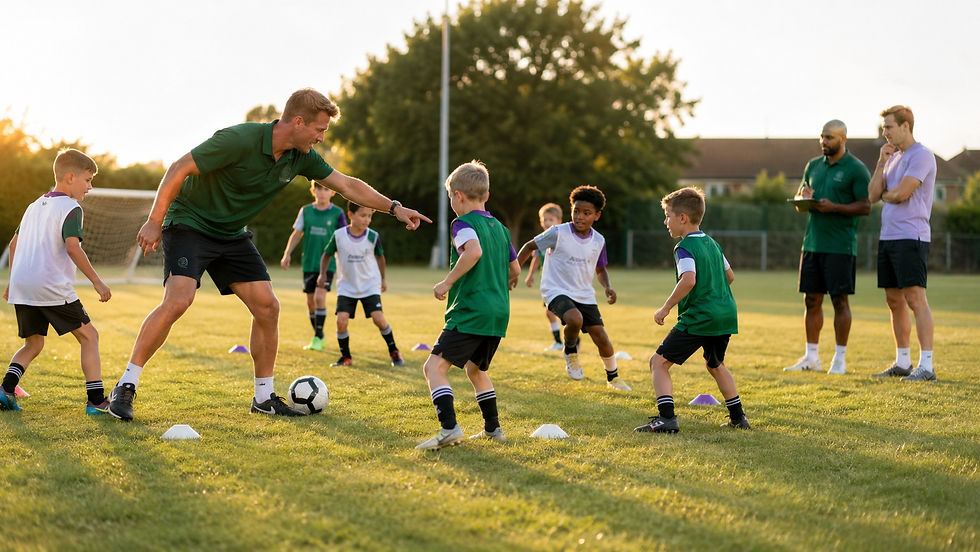
The Fair Coach is the figure many football players describe as strict but fair. The teaching is clear, the standards are stable, and attention is spread evenly across the squad. Fairness here is not only a value. It is a learning tool that lifts trust, listening, and engagement, even when the football player is being challenged.
Does your child feel the coach is strict but fair?
What Fairness Looks Like Day to Day
Fairness shows up in patterns, not in speeches. Watch the everyday signals across training and matchday:
Similar effort gets similar recognition, regardless of who delivers it.
Mistakes meet correction, not ridicule or sarcasm.
Rules apply to the most talented football player, not only to the rest of the squad.
Time and eye contact reach the quieter football players, not only the confident voices.
This is not the same as equal minutes for everyone. It is transparency and consistency in how decisions are explained and applied. When the pattern holds week after week, trust grows quietly in the background and effort goes up.
The Fair Coach Makes Football Simple
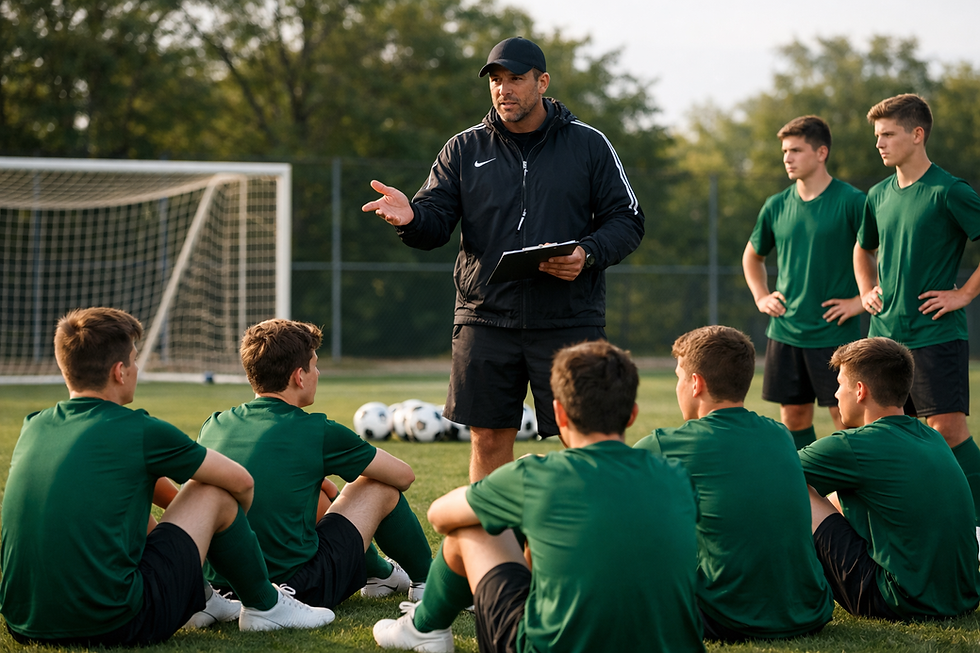
A Fair Coach is skilled at making complex football feel simple. Sessions tend to share a few features:
one clear theme per session,
demonstrations that match the task being asked of the football player,
cues that are short and easy to repeat under pressure.
Many use a teach, play, teach rhythm. They show a point, let football players try it, then refine it with a small correction. The aim is not constant talking. It is purposeful teaching that respects attention spans and protects deliberate practice time on the ball.
Feedback That Helps Every Football Player Improve
This coach uses specific, actionable feedback more than general praise. Crucially, the feedback is distributed across the group, so development never becomes a private service for the favoured few. Quieter football players get the same investment as the loud ones.
Common features look like this:
They name the behaviour, for example "you checked your shoulder early".
They name the next step, for example "now receive across your body".
They avoid all-or-nothing judgements that shut learning down.
Over time, balanced and specific feedback tends to lift team cohesion, because every football player sees a clear path to improvement. The praise is honest, the correction is precise, and the message stays consistent across weeks.
Trust in Selection and Standards
A Fair Coach protects the squad from the slow poison of favouritism stories. When standards and selection logic stay consistent, football players spend less energy guessing what the coach wants and more energy improving what they can actually control.
The style still needs warmth. Fairness without human connection can feel cold and clinical. The strongest version of this coach combines clarity, consistency, and genuine respect for each football player as a person, not a position on a team sheet.
Parent Advice
Watch whether your coach applies the same rules and consequences to the top players, because uniform standards stop favouritism stories from spreading.
Listen for whether the coach describes a specific action and the clear next step, rather than offering vague encouragement after every drill.
Notice whether the quieter football players receive equal teaching investment, because that distribution shows whether the fairness is genuine rather than performed.
Key Takeaways
Uniform rules across the squad remove the drain of favouritism doubt and free football players to put their energy into actual improvement.
Naming the action and the next step gives the football player something concrete to work on, while vague praise leaves nothing actionable.
Transparent and stable selection logic lets football players invest in what they can control instead of decoding the coach's hidden preferences.
Is fairness helping your child stay engaged and learn?
References
Corbett, R., Partington, M., Ryan, L., & Cope, E. (2024). A systematic review of coach augmented verbal feedback during practice and competition in team sports. International Journal of Sports Science & Coaching, 19(2), 864-881. https://doi.org/10.1177/17479541231218665
Lemelin, E., Verner-Filion, J., Carpentier, J., Carbonneau, N., & Mageau, G. A. (2022). Autonomy support in sport contexts: The role of parents and coaches in the promotion of athlete well-being and performance. Sport, Exercise, and Performance Psychology, 11(3), 305-319. https://doi.org/10.1037/spy0000287
Li, L., Olson, H. O., Tereschenko, I., Wang, A., & McCleery, J. (2024). Impact of coach education on coaching effectiveness in youth sport: A systematic review and meta-analysis. International Journal of Sports Science & Coaching, 20(1), 340-356. https://doi.org/10.1177/17479541241283442
Lochbaum, M., & Sisneros, C. (2024). A systematic review with a meta-analysis of the motivational climate and hedonic well-being constructs: The importance of the athlete level. European Journal of Investigation in Health, Psychology and Education, 14(4), 976-1001. https://doi.org/10.3390/ejihpe14040064
Zhu, J., Wang, M., Cruz, A. B., & Kim, H.-D. (2024). Systematic review and meta-analysis of Chinese coach leadership and athlete satisfaction and cohesion. Frontiers in Psychology, 15, 1385178. https://doi.org/10.3389/fpsyg.2024.1385178